TYPICAL SIZES
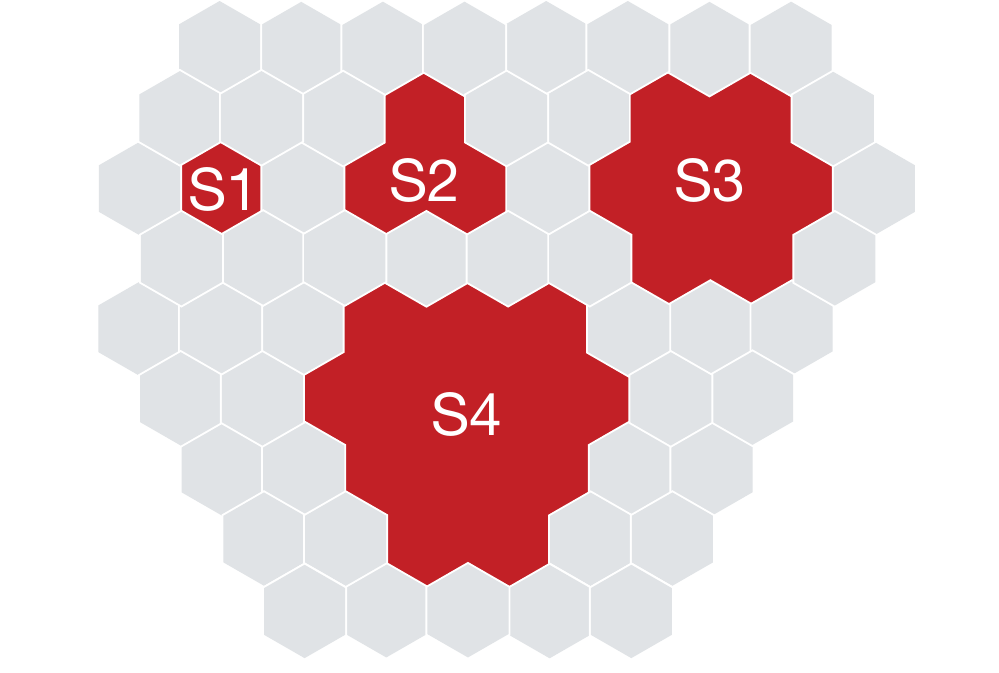
| Size | Description |
|---|---|
| 1/2 | Humans, some small mechs, extravehicular activity (EVA) suits |
| 1 | Standard mechs. |
| 2 | Tanks, vehicles ( e.g. APCs or construction vehicles), heavy mechs. |
| 3 | Siege mechs, large or heavy vehicles. |
| 4+ | Titanic mechs, flyers. |
SIZES

Humans, some small mechs, extravehicular activity (EVA) suits.
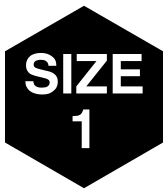
Standard mechs.
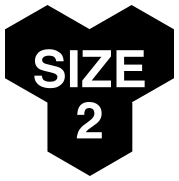
Tanks, vehicles ( e.g. APCs or construction vehicles), heavy mechs.
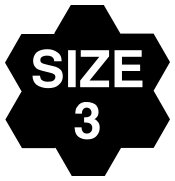
Siege mechs, large or heavy vehicles.
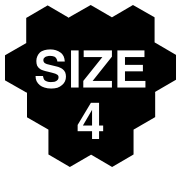
Titanic mechs, flyers.
Movement
On their turn, characters can always move spaces equal to their SPEED, in addition to any other actions. This is called a standard move to distinguish it from movement granted by systems or talents.
A character only counts as moving if they move 1 or more spaces.
Characters can move into any adjacent space, even diagonally, as long as the space isn’t occupied by an obstruction (and is one that they would be able to move in – characters can't move straight up unless they can fly, for example).
Cover does not stack, you have either one or the other:
Soft Cover | Adds +1:LaLancerDifficulty: Difficulty to a ranged attack roll.
Hard Cover | Adds +2:LaLancerDifficulty: Difficulty to a ranged attack roll.
Your mech’s SPEED determines how far you can move on your turn, in spaces, when you make a standard move or BOOST.
Any time characters voluntarily move, whether it’s a standard move or something else, they can split up their movement with any actions; however, when they do this, any non-movement actions they take must fully resolve before they continue moving. For example, a mech with 6 SPEED could move 4 spaces, BARRAGE, and then move two more spaces; however, it would need to complete the full BARRAGE action – firing with two mounts – before moving those final 2 spaces. It couldn’t fire one mount, move two spaces, and then fire another mount.
Characters are considered adjacent to another character or object when they are within one space of it in any direction – even diagonal and vertical.
An obstruction is anything that blocks passage, preventing movement into its space entirely. Obstructions are typically environmental but other characters can also be obstructions. Characters are obstructed by any solid objects or characters that are the same SIZE as them or larger. Characters can freely pass through spaces occupied by obstructions smaller than them, including other characters; however, they can’t end a movement in a space that is occupied by another character or object unless specified. This means that a SIZE 2 mech, for example, could move through the space of a SIZE 1 mech or object, but could not finish its move in the same space. Allied characters never cause obstruction, but characters still can’t end moves in their space.
Additionally, mechs can always move through spaces occupied by unmounted humans.
If a character moves adjacent to a hostile character, they both gain the ENGAGED status for as long as they remain adjacent to one another. Ranged attacks made by an ENGAGED character receive +1:LaLancerDifficulty:. Additionally, characters that become ENGAGED by targets of equal or greater SIZE during the course of a movement stop moving immediately and lose any unused movement. After you have become ENGAGED with a character, you may make further move actions as normal and
moving into other adjacent spaces does not stop your movement, though beginning a move within that character's threat may provoke reactions such as OVERWATCH.
When characters are pushed, pulled, or knocked in certain directions, it is called involuntary movement. Involuntary movement forces the affected character to move in a straight line, in a specified direction.
When moving involuntarily, mechs do not provoke reactions or engagement unless specified otherwise but are still blocked by obstructions.
Characters move at half speed in difficult terrain.
Once per round, characters that end their turn in dangerous terrain or move into it for the first time must make a ENGINEERING check. On failure, take 5 damage:
kinetic:LaLancerKineticdamage:, energy:LaLancerEnergydamage:, explosive:LaLancerExplosivedamage:, or burn:LaLancerBurndamage:, depending on the hazard.
Mech combat takes place on many types of worlds in countless hostile and hazardous environments. Characters move at half speed through difficult terrain – each space of difficult terrain they move into is equivalent to two spaces of movement. Difficult terrain can be anything from rough, marshy, or swampy ground, through to icy landscapes, and treacherous, rocky scree. When characters end their turn in dangerous terrain or move into it for the first time in a round, they must make an ENGINEERING check. On a failure, they take 5 damage – kinetic:LaLancerKineticdamage:, energy:LaLancerEnergydamage:, explosive:LaLancerExplosivedamage:, or burn:LaLancerBurndamage:, depending on the hazard. Each character only needs to make one such check per round. Intense radiation, boiling gases, lava, and falling rocks are all examples of dangerous terrain.
Mechs can drag characters or objects up to twice their SIZE but are SLOWED while doing so. They can also lift characters or objects of equal or lesser SIZE overhead but are IMMOBILIZED while doing so. While dragging or lifting, characters can’t take reactions. The same rules apply to pilots and other characters on foot, but they can’t drag or lift anything above SIZE 1/2.
Characters climb and jump at half their usual SPEED.
HULL or AGILITY checks might be required for difficult surfaces.
Characters may jump a number of horizontal or vertical spaces equal to their SIZE.
Characters with legs can jump instead of their standard move. They may jump horizontally, moving half their speed in a straight line and ignoring obstructions at ground level that they could jump over (such as pits or gaps), or they may can jump vertically, moving 1 space adjacent and moving up by spaces equivalent to their SIZE. For example, a SIZE 1 mech could jump up to 1 space high, and 1 space over. Characters that jump and end the jump mid air automatically fall at the end of the move (see below).
Like moving through difficult terrain, characters climb at half their usual SPEED – each space moved is equivalent to moving 2 spaces normally. A successful HULL or AGILITY check might be required to climb particularly difficult surfaces without falling.
When falling more than 3 spaces, take 3:LaLancerKineticdamage:AP for every 3 spaces fallen, to a max of 9:LaLancerKineticdamage:AP.
Characters take damage when they fall three or more spaces and cannot recover before hitting the ground. In standard circumstances, characters fall 10 spaces per round, but mechs can’t fall in zero-g or low-g environments, and falling speeds may differ depending on the location. Unless specified otherwise, characters start to fall at the end of the current turn, and fall at the end of each of their turns thereafter. They take 3:LaLancerKineticdamage:AP (armor piercing) for every three spaces fallen, to a maximum of 9:LaLancerKineticdamage:AP.
Falling is a type of involuntary movement.
Mechs operating underwater, in zero-g, or in space are SLOWED unless they have a propulsion or flight system; however, they can’t fall and can fly when moving regardless of whether they have a flight system.
Some characters can fly for either all or part of their movement. Flying characters can move vertically and horizontally up to their SPEED. For example, a mech with a flight system and 6 SPEED could end its movement anywhere within six spaces of its starting location, up to a maximum of 6 spaces high. Flight movement must follow a straight line; however, if a character takes additional movement actions, such as BOOST, these can be used to move in a different direction.
When flying, characters ignore obstructions as long as it is physically possible for them to do so – they couldn’t, for instance, move through a gap smaller than their mech. Flying characters also have IMMUNITY to PRONE. Flying also comes with some risks:
- When flying, characters must move at least 1 space on their turn or begin falling.
- Flying characters begin falling if they become IMMOBILIZED, STUNNED, or otherwise can’t move.
- Flying characters that take structure damage or stress must succeed on an AGILITY save or begin falling.
- During mech combat, characters that fly too high above the battlefield can only take certain actions.
Flying characters must remain no more than 10 spaces over any surface (e.g., ground, water, structures) to act normally. For instance, a flying mech could move 10 spaces above the ground or float 10 spaces above a building five spaces high – a total of 15 spaces above the ground – and still act. Characters cannot move beyond this distance if they have already taken an action in the same turn; if they do move more than 10 spaces above the battlefield, they can only move and BOOST, and cannot take reactions until they start their turn below that ceiling.
This restriction does not exist in zero-g and outside of mech combat.
Except in zero-g environments, mechs cannot carry characters or objects with a total SIZE larger than SIZE 1/2 while flying – there’s just not enough thrust!
Some very advanced mechs can hover. Hovering characters do not need to move in a straight line, and can remain stationary while airborne without falling.
Some characters can teleport, instantly moving to
any free space within a specified range. They must start and end a teleport on a surface they can normally move on; for example, a character that can’t fly can’t teleport mid-air.
Teleportation ignores obstructions, does not require line of sight, ignores engagement, and does not provoke reactions; however, it still counts as movement and so is affected by conditions like IMMOBILIZED. A teleporting character counts as moving 1 space, no matter how far they travel.
Characters can attempt to teleport to spaces they can’t see, but if a space is already occupied, the teleport fails.
^teleportation